Porcelain or Stoneware? Reading Two Different Ceramic Bodies
Porcelain or stoneware can be hard to tell apart at a glance. Learn which clues to check and why a vessel’s appearance cannot reveal its full history.
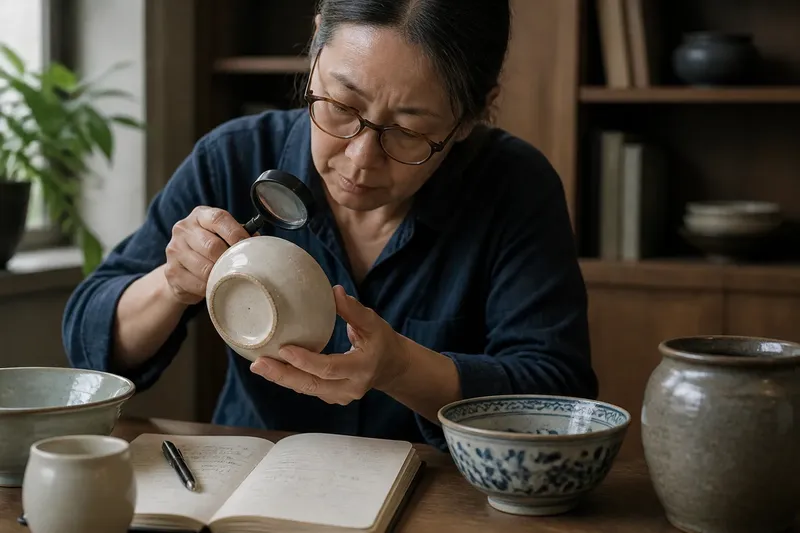
Is that pale bowl porcelain or stoneware? Porcelain or stoneware can be difficult to distinguish when glaze, decoration or wear conceals the clay body. Start by looking at the rim, foot and any unglazed patch, then treat each clue as part of a larger reading rather than a verdict.
The distinction matters because these bodies are made from different clay mixtures and fired to different results, but an object’s present appearance also reflects its glaze, use, repairs and later handling. A careful inspection can narrow the possibilities; it cannot, by itself, establish where or when a piece was made.
Start with the exposed body, not the glaze
Glaze is a surface layer. It can make stoneware look as white and smooth as porcelain, or give porcelain a dark, earthy appearance. Turn the object over and inspect the foot ring, base, chipped edges or any other exposed clay. Use a bright, indirect light and, if needed, a magnifying glass. Do not scrape a sound surface to create a sample.
Porcelain bodies are commonly pale, fine and dense, though their colour can vary. Stoneware bodies can range from buff and grey to brown or nearly black, and often look more visibly granular at an exposed edge. These are tendencies, not rules: pale stoneware exists, and porcelain may be coloured by its ingredients or decoration.
Think of the glaze as paint on a wooden chair: it changes the surface you see, but it does not tell you what lies underneath. With ceramics, the foot and edges offer a better view of the body, though even those clues need context.
Check translucency without treating it as a test
Hold a thin, unglazed area near a lamp or window. Some porcelain allows light to pass through its body; most stoneware does not. The effect depends on the piece’s thickness, colour, firing and the strength and angle of the light. A thick porcelain base may appear opaque, while a thin edge or pale glaze can create a misleading glow.
If the object is valuable, fragile or has a damaged edge, do not press it against a bulb or handle it in a way that risks a fall. Use the light as a gentle observation, not a pass-or-fail test. Translucency can support an identification when other clues agree, but it cannot settle the question alone.
Notice density, sound and the limits of handling
Porcelain often feels compact for its size, while stoneware may feel substantial and earthy. Yet shape and wall thickness affect weight just as much as the ceramic body. A small, thick porcelain cup can feel heavier than a broad, thin stoneware dish, so weight is only a secondary clue.
People sometimes tap a vessel and judge its ring. This is a poor first method for an unfamiliar object: cracks, repairs, shape and glaze all alter the sound, and tapping can damage a weak rim. If the piece is already being handled safely, a light touch with a finger may reveal a difference in resonance, but do not use that sound to override visible evidence.
Work through common identification problems in order
- The whole surface looks white. The cause may be a white glaze over a darker body. Inspect the foot and any existing chip; if no body is exposed, leave the identification provisional rather than scratching the glaze.
- The base is dark, so the piece seems to be stoneware. The colour may come from clay, an applied slip, kiln conditions or residue. Compare the exposed body at more than one existing edge, and note whether the colour is uniform or confined to the surface.
- A thin edge glows, so the piece seems to be porcelain. Light may be passing through a thin glaze or an unusually pale body. Check whether the glow is visible through unglazed clay and compare it with the body’s texture and density.
- The foot ring looks rough or gritty. Firing and finishing can leave a coarse-looking foot on different ceramic bodies. Look for the body’s colour and grain at an exposed edge instead of treating foot texture as a category by itself.
- Decoration obscures every useful surface. Painted or coated areas may hide the clay and offer little material evidence. Examine the underside and rim under angled light; if the body remains covered, describe the object’s visible features without forcing a label.
- A crack or chip seems to provide a clear answer. Damage can expose the body, but an old repair, stain or later coating may distort its appearance. Do not pick at it; record what is visible and seek a ceramics specialist’s opinion if the identification matters.
Why does a material clue not reveal an object’s history?
Can colour identify porcelain or stoneware?
No. Body colour offers a clue, but recipes and firing can produce varied colours within either broad category. Compare colour with texture and other exposed areas.
Does a maker’s mark settle the material?
A mark can point towards a maker or workshop, but marks may be copied, added later or misread. Treat it as evidence to compare with the object, not as a complete account of its origin.
Can appearance tell you where a vessel was made?
Not reliably on its own. Similar bodies, glazes and forms appear across different places and periods, while trade and imitation further complicate attribution.
What should you do if the distinction affects care or value?
Keep the object stable and avoid abrasive cleaning or home tests. Ask a qualified ceramics conservator or appraiser to assess the body and any repairs when a dependable identification has practical consequences.
Separate material identification from attribution
Even a sound reading of the body answers only one question: what kind of ceramic material may be present? It does not identify a particular kiln, workshop, region or period. Those claims require evidence beyond appearance, such as documented ownership, a credible mark, a distinctive construction detail or specialist comparison.
Say you inherit a cream-coloured serving dish with a glossy glaze and a small, already-chipped foot. You inspect the exposed edge and find a pale, fine body, while the thick base shows no translucency. Rather than declaring it porcelain or assigning it a place of origin, you note the observed clues and photograph the mark and foot for a ceramics specialist. The useful result is a more precise description and a clearer question for further assessment.
For your own notes, separate observation from interpretation: write “pale, fine body visible at foot” before writing “possibly porcelain”. That small distinction keeps porcelain or stoneware identification grounded in what you can actually see, while leaving the object’s wider history open to evidence it has yet to offer.